Burj Khalifa
 click to manage
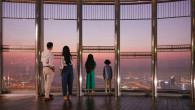
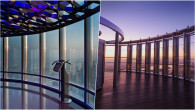
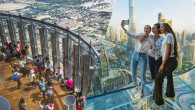
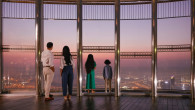
There are tall buildings, there are very tall buildings, and then there is the Burj Khalifa. Standing at 829.8 meters, just over half a mile, it has been the tallest structure on the planet since its topping out in 2009, surpassing Taipei 101, which had held the record for half a decade. But the raw number only tells part of the story. Dubai built it for a reason. The emirate had been watching its oil reserves dwindle for years and made a calculated bet on tourism and global prestige instead. The Burj Khalifa was the centerpiece of that bet. It was originally designed to be just 518 meters tall, a mere 10 meters taller than Taipei 101. It grew by roughly 310 meters during the design process, approximately the height of the Eiffel Tower. Nobody wanted a narrow record. They wanted a statement. The tower was designed by Skidmore, Owings and Merrill, the same firm behind the Willis Tower in Chicago and One World Trade Center in New York. Lead architect Adrian Smith drew inspiration from Islamic architecture, particularly the spiral minarets of the Great Mosque of Samarra, giving the building its distinctive tapering, twisting silhouette. The name has a story too. Originally called Burj Dubai, it was renamed when the President of the UAE lent Dubai the funds needed to complete the project after the 2008 financial crisis nearly brought construction to a halt. The name is essentially a thank-you note written in steel and glass, visible from miles away. Engineering it was a different beast entirely. Dubai's loose sandy soil posed a huge challenge, resolved by inserting 194 friction piles 50 meters below the surface. Wind was an equal concern. The Y-shaped floor plan was specifically designed to break up airflow and prevent dangerous rhythmic swaying, a technique the structural engineers described as "confusing the wind." At the very highest floors, the building can sway up to two meters in high winds, but this flex is entirely intentional and safe. The construction numbers are staggering. It required 330,000 cubic meters of concrete, equivalent to the weight of 100,000 elephants, and so much reinforcing steel that laid end to end it would stretch a quarter of the way around the planet. It took 22 million man-hours to build, totaling over 2,500 years of labor. More than 12,000 workers from around the world were on site at peak construction. Some of the quirks are genuinely delightful. On the higher floors, the sun is visible for several minutes after it has already set at ground level. Those living above the 80th floor wait two extra minutes to break their Ramadan fast, and those above the 150th floor wait three. The building also collects condensation from its own air conditioning system, producing around 15 million gallons of water annually, which is used to irrigate the surrounding park and feed the famous Dubai Fountain below. The exterior cladding includes more than 28,000 hand-cut glass panels, and cleaning the whole building from top to bottom takes approximately three months. It contains 57 elevators, a restaurant on the 122nd floor, and an observation deck at the 148th. It has been BASE jumped from, climbed by free solo climbers, and featured in blockbuster films. It remains, by a wide margin, the tallest thing humanity has ever built.
This 5 rated description was provided by Mac
To rate this description and view other descriptions, click here
Type: Tourist Attraction
Address: Burj Khalifa 1 Emaar Boulevard Downtown Dubai - Dubai - United Arab Emirates, Dubai, United Arab Emirates
Website: https://www.burjkhalifa.ae/
Opening Date: 04/01/2010
Accessible
Tickets & Experiences
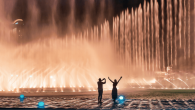
From AED 25.00
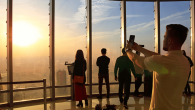
From AED 105.00
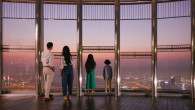
From AED 164.00
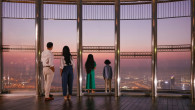
From AED 188.00

From AED 189.00
From AED 189.00
From AED 189.00
From AED 189.00
From AED 189.00
From AED 189.00
From AED 199.00
From AED 205.00
From AED 272.48
From AED 323.00
From AED 343.00
From AED 448.75
From AED 633.00
From AED 769.00
Upcoming Events (0 total upcoming events)
Past Events (0 total past events)
Entertainment News
No news available.